Pages

Showing posts with label fasting in ramadan. Show all posts

The Three Principles of Fasting in the Month of Ramadan


The three principles of fasting in Ramadan are abstention, Tawheed (monotheism) and devotion. Without these three principles, the Muslim fasting has failed.


Ramadan occurs annually and it's a month of fasting that's considered mandatory for all Muslims, except if they are sick or in the midst of traveling. Whether doing a required fast in Ramadan or a voluntary fast, such as on the day of Arafat, Muslims follow the three principles of fasting. A Muslim cannot have a successful fast without following those three principles which include:
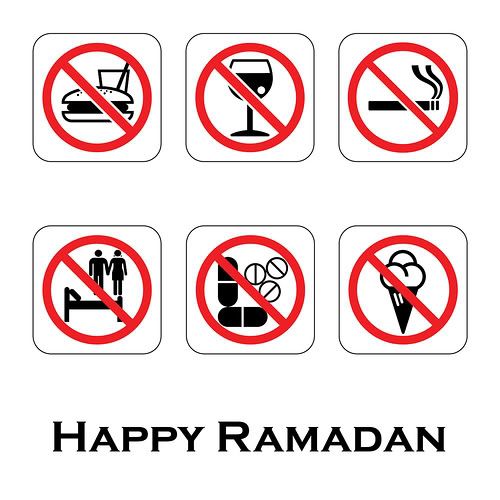
  • Abstention: No food, intercourse, bad speaking, lying, stealing or fighting.
  • Tawheed: The belief in One God, Allah as the sole provider of everything.
  • Devotion: Loving Allah and the Prophet more than their self or loved ones.


 What is Abstention in the Month of Ramadan?


Abstention means to go without many things; it's not just a matter of going without food and water from sunrise to sunset. Ramadan serves as a reminder for Muslims, who experience a bit of what it's like to be poor and to go without; it instills compassion and awareness. Ramadan requires all Muslims to ensure that their neighbors have sufficient food and clothing. Through abstention and following the three principles of fasting, all devout Muslims experience immense joy during the month of Ramadan.

Abstention also includes avoiding intercourse or sexual relations with the spouse. Intercourse or sexual relations can be resumed after the fast is broken until the start of the fast the following morning, if desired. Before the fast can resume the next morning, both husband and wife must fully bathe.

Muslims must also give up bad speech, and they avoid watching and listening to material dealing with forbidden subjects. During Ramadan fasting, Muslims must not lie, steal, backbite, be guilty of scandal mongering and they cannot smoke until the fast is broken. If the fasting Muslim makes a mistake in eating accidentally, it's acceptable to ask for forgiveness from Allah; then, the fast is resumed. In Islam, engaging in sexual relations during the Ramadan fast nullifies the fast.


Tawheed, the Main Principle of Fasting

Tawheed or monotheism is the belief that there is only one God; Muslims do not believe in the trinity. For a Muslim, to even think or say that Jesus was the son of God is considered shirk (attributing partners to Allah) and is regarded as an unforgivable sin in Islam. Shirk is the only unforgivable sin and is considered to be worst than rape or murder.

Tawheed is part of the shahadah (declaration of faith) that is signed by all Muslim converts and is the main belief in the three principles of fasting in Ramadan. Without Tawheed, also translated as Tawhid and Tauheed, Muslims cannot exist in this world. Tawheed teaches the principle of destiny. Muslims must never question why such and such as happened, but merely accept that Allah has decided and He has done what He pleases.
In Islam, it's believed that sustenance, health and children are all from Allah and believing in Allah's mercy and wisdom is a must. So when considering the three principles of fasting, the Muslim must first consider Allah.


Devotion to Allah and Islam is the Third Principle of Fasting


In Islam, Muslims must love Allah and His messenger, Prophet Mohammad (peace be upon him*), more than their own life or loved ones. This means that what Allah wants is what the practicing Muslim wants. A woman who converts to Islam must leave after three menstrual cycles if the non-Muslim husband refuses to convert.

When Allah has ordered Muslims to fast, the Muslim must fast. Praying five times a day is required — not a choice — and giving zakat is also required. Loving the Prophet Mohammad (peace be upon him*) with every breath is also a must in Islam; this is why when Prophet Mohammad is insulted, it's said that the whole Muslim nation weeps.

Devotion includes worshiping Allah with praise and by reading the Quran. Many find that it is not easy to be Muslim in this day and age, particularly with the many requirements that a Muslim must perform. The three principles of fasting were designed to increase faith and religious endurance for all believing and devout Muslims across the world.


The Three Principles of Fasting in the Month of Ramadan


To summarize the three principles, the Muslim fasting must be humbly devoted to Allah, the Creator and follow the rules of Islam. The reward for following the three principles of fasting, is jannah or heaven. It is a pleasure and a way to raise the status of the Muslim by following the three principles of fasting which are included in the principles of Islam.

It's believed that the love of Allah will increase and so will the desire to be a better Muslim through sincere devotion and belief. The love and devotion to Islam will cause hopefully all sins to be removed and body is left clean and the soul is refreshed.

* Muslims invoke Allah's blessings on the Prophet Muhammad whenever this name is mentioned.

Resources:

"Ramadan Rules and Regulations," Islam Today.

Photo courtesy of Photobucket:  umm_rumaysa

Major Things to Avoid While Fasting in the Month of Ramadan


There are many things that Muslims should avoid while fasting and this article will explain fully how to fast correctly. Is boycotting part of fasting?

Ramadan is a month of everything halal (permissible) and it is a month of avoiding the haram (forbidden). The rules and guidelines of Ramadan have been established by Prophet Mohammad over 1400 years ago and the sharia has emphasized the importance of following the Sunnah (ways and words of the prophet).


When looking at how to become closer to Allah, the Muslim should avoid things that would allow the shaitan (devil) to enter and cause doubt in the mind. When Ramadan approaches and Muslims everywhere are preparing for a month of fasting and devotion, it is a time also to prepare the home.

Which foods to eat when breaking the fast may include avoiding boycotted products of both Israel and Denmark. Boycotting was never part of the Sunnah, but what is part of Islam is defending Muslims being persecuted and defending anyone annoying Prophet Mohammad in anyway.

Many prominent leaders from all over the world have praised Prophet Mohammad in how he was one of the great leaders of the world. Here are a few things that have been said: Prophet Mohammad: You Must Know This Man.

It should be a personal decision concerning boycotting and something that is suggested, not something mandatory. Ramadan is to avoid all thoughts of war, hatred and desire to do harm. It is a month of wanting to help those who have less, the sick and the persecuted. Boycotting is a peaceful demonstration affecting the pocketbooks of those who harm Islam.

Is Smoking Forbidden While Fasting?


The sharia has stated that anything that harms the body and that will cause eventual death including food and drugs must be avoided. For this reason smoking is haram. During fasting Muslims are not permitted foods, drugs (unless a medical necessity) and smoking. Many Muslims will go the entire month without smoking and as soon as the call for prayer is announced, the smoking starts once more.

Smoking is an addictive substance and it harms the body and it harms those near. The second most preventable death is second hand smoke. On judgment day would a Muslim be held accountable for the death of a spouse due to the inhalation of smoke fumes? Allah knows best.


Backbiting, Lying and Scandal Mongering Forbidden All the Time


Lying is a sign of being a hypocrite and being a hypocrite is one reason for severe punishment of the grave. No true Muslim can be a liar as this is against everything taught in Islam. It is important while fasting in Ramadan that the Muslim remain honest and pure.
"The signs of the hypocrite are three: when he speaks he lies, when he promises he breaks his promise and when he is entrusted he betrays the trust." (Bukhari and Muslim)

Both backbiting, spreading of gossip and scandal mongering are forbidden in Islam. Scandal mongering is the spreading of a "truth" in a manner that would not please the person being talked about. Scandal mongering is the worst of the three sins also.

"The worst servant of Allah is the one who is double faced, who praises his Muslim brother in his presence and speaks ill of him in his absence; and he is jealous of him when the other is rich, but forsakes him when in need. (Imam Ja'far Al-Saadiq, book of Al-Usool from Al-Kaafi, Vol. 2, page 343).

This saying speaks of lying and scandal mongering. Two of the worst sins a devout Muslim can possess. The better Muslim speaks good or remains silent and covers the faults of the Muslim brother.A Muslim must make 70 excuses for a friend before becoming angry.


Sexual Intercourse to be Avoided


All sexual intercourse is to avoided until the fast is broken. Both husband and wife are held responsible for any sexual contact. Even kissing must be avoided, if it would arouse feelings that need to be avoided. Prophet Mohammad has guided the Muslim on the correct conduct during Ramadan and should a Muslim break this rule, the fast is void. Unlike when food is eaten accidentally, the Muslim simply asks Allah for forgiveness and continues the fast.

If the sexual intercourse was intentional then the Muslim must fast an additional 60 days continuously in a row. If the person is unable to do that then the feeding of 60 poor people is necessary. In addition to sexual intercourse, masturbation is also forbidden.


Speak No Evil, Hear No Evil and Say No Evil


In a final summary of what is to be avoided, follow the "speak no evil, hear no evil and say no evil" title. Television and computer time should be eliminated, except for the watching of news, prayer services in Mecca and Medina and programs to teach the Muslim how to fast and become close to Allah.

Do not remain in the company of those who do wrong and commit sins and avoid and backbiting and scandal mongering. The Muslim who listens to gossiping would be held responsible as though the words came from their own mouth. It is a time to read Quran, go to the mosque and pray the late night prayers and send blessings on Prophet Mohammad, peace be upon him.

Search for Layalat al Qadr in the last ten days of the month and say A Special Prayer for Layalat Al-Qadr in hopes of obtaining the reward of 1000 months of worship. Say dua for the sick, the needy and the persecuted and make nothing bad in the dua and only seek Allah's protection from any evil intended.

Muslims invoke Allah's blessings on the Prophet Muhammad whenever this name is mentioned.

Photo courtesy of Photobucket: admin6046